 |
| via: bldgblog |

11.07.2011


Trying to obey the teacher
... without much luck.
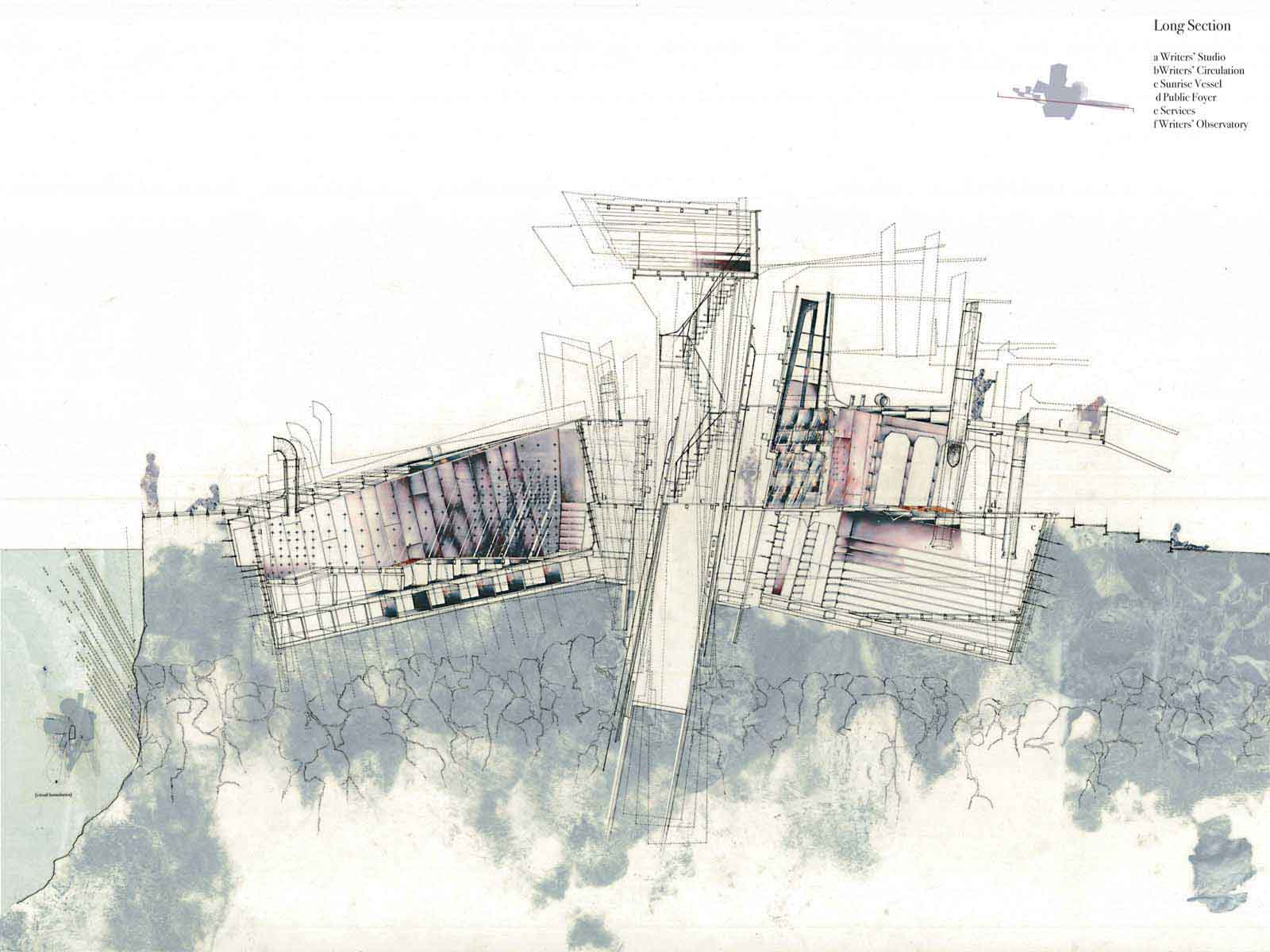
Sequential transformation.
Section, plan and fractal
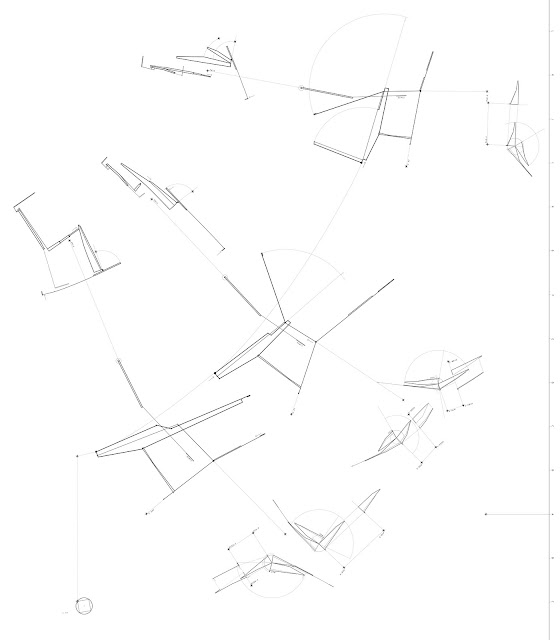
Sequential transformation.
Section, plan and fractal


11.03.2011
10.28.2011
Metabolism | Fantastic combination of utopia and dystopia
 |
Tange Kenzo, A Plan for Tokyo 19601961. Photo: Kawasumi Akio. Photo courtesy: TANGE ASSOCIATES
|
 |
| Kikutake Kiyonori, Marine City, 1963 |
 |
| Kurokawa Kisyo, Nakagin Capsule Tower Building, Tokyo, 1972. Photo: Ohashi Tomio Pictures via: Domus |

10.26.2011
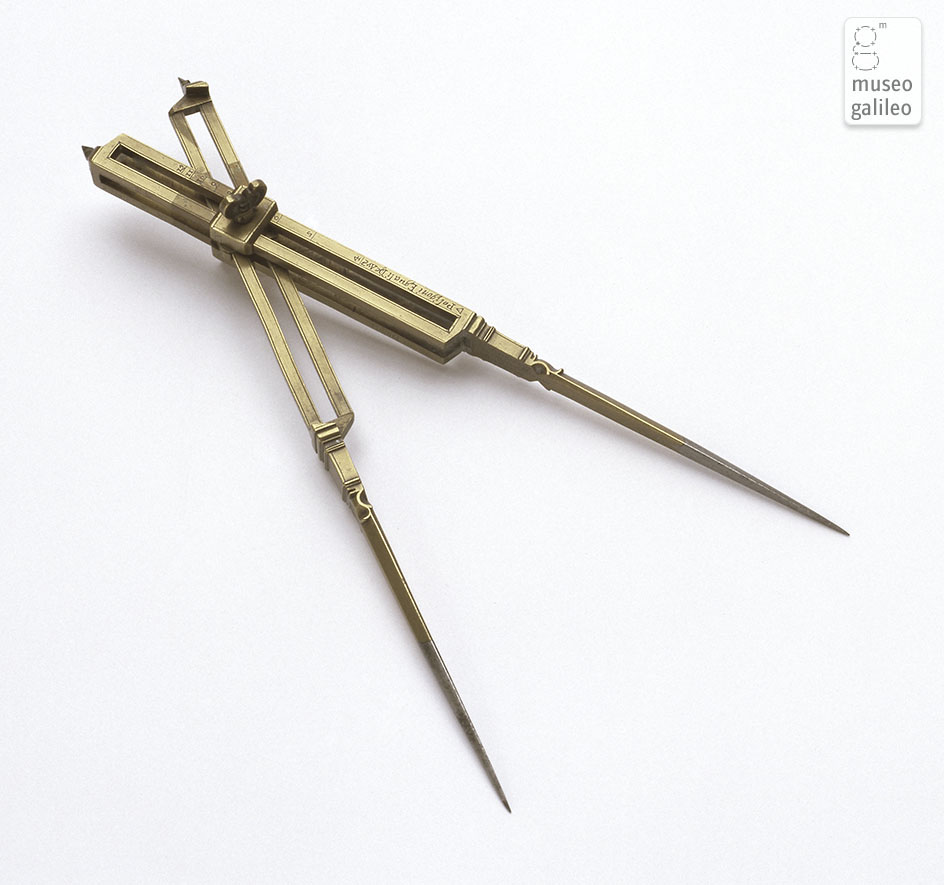
Engineering in the 17th Century
"The term "compass" or "compasses" denotes a wide range of instruments for drawing, measurement, and proportional calculation. Besides the more common compasses for drawing circumferences, widespread since antiquity, the Renaissance has left us a great number of special compasses, whose names reflect their specific functions: oval compasses to draw ellipses, hyperbolas and parabolas; two-point compasses—also called dividers—to divide lines and transfer measurements; nautical compasses, to track routes on sea-charts; compasses with curved points, called gunner's compasses, to measure mouths of cannons, cannon balls, and columns; three-legged compasses to reproduce maps; four-point compasses, or reduction compasses, to enlarge or reduce drawings, divide lines and circumferences proportionally, and draw polygons; eight-point compasses to measure fractions of degrees and carry out proportional calculations; proportional compasses to perform arithmetic, geometric, and trigonometric calculations and to measure weights, gradients, and distances for military use; and sophisticated surveying compasses that combined a magnetic compass, a windrose, and optical sights for surveying and for drawing topographic maps."
-Museo Galileo

-Museo Galileo
10.25.2011

10.24.2011
3D or multiple 2D
In my current project I'm superimposing a new physical layer in an urban context. Giving the public space a push towards three-dimensionality or at least multiple two-dimentionallity.
I'm also interested in taking on the task of incorporating the aspect of time as a fourth-dimension.
But how do you draw time?
This is one in a row of projects where Peter Cook is showing the flow of time (or metamorphosis, as he calls it) through a set of dynamic drawings.
I'm also interested in taking on the task of incorporating the aspect of time as a fourth-dimension.
But how do you draw time?
This is one in a row of projects where Peter Cook is showing the flow of time (or metamorphosis, as he calls it) through a set of dynamic drawings.
 |
| Picture 1-4 drawn in July 1996 and 5-6, in March 2001 From: Drawing the Motive Force of Architecture - P. Cook |

10.23.2011
10.21.2011
Algae competition update
It's now possible to see previews of submitted entries for the International Algae Competition 2011.
They have done a strange collage of my elevation and movement-diagram, as well as making a free interpretation of my narrative. But it's just a preview miniature, I hope so anyway.
On November 12 all entries will be exhibited on their website.

On November 12 all entries will be exhibited on their website.

Pink Collage
I'm trying to get my thoughts clear (or maybe unclear) by doing a collage.
I've tried a new medium to express my thoughts on the project at hand.
It's always interesting to work parallel in computer, by hand, line-drawing, 3D, physical model, painting, collage etc. I think it's possible to get to know your project further as well as be able to see more potential in it, if you use multiple techniques.
I'll explain more on my program further on.

I've tried a new medium to express my thoughts on the project at hand.
It's always interesting to work parallel in computer, by hand, line-drawing, 3D, physical model, painting, collage etc. I think it's possible to get to know your project further as well as be able to see more potential in it, if you use multiple techniques.
I'll explain more on my program further on.
10.20.2011

10.18.2011
Project Mercury - Gimbal Rig
I found this amazing device while browsing through NASA's image gallery.
The Gimbal Rig (formally known as MASTIF - Multiple Axis Space Test Inertia Facility) in the Altitude Wind Tunnel (AWT), was engineered to simulate the tumbling and rolling motions of a space capsule and train the Mercury astronauts to control roll, pitch and yaw by activating nitrogen jets, used as brakes and bring the vehicle back into control.
This facility was built at the Lewis Research Center, now John H. Glenn Research Center, Cleveland OH.


The Gimbal Rig (formally known as MASTIF - Multiple Axis Space Test Inertia Facility) in the Altitude Wind Tunnel (AWT), was engineered to simulate the tumbling and rolling motions of a space capsule and train the Mercury astronauts to control roll, pitch and yaw by activating nitrogen jets, used as brakes and bring the vehicle back into control.
This facility was built at the Lewis Research Center, now John H. Glenn Research Center, Cleveland OH.


 |
| via: NASA Images |